
By Eamonn Ryan
At the 2025 GCCA Africa Cold Chain Conference, a discussion unfolded around US–South Africa trade relations. This is the second instalment of a three-part series.
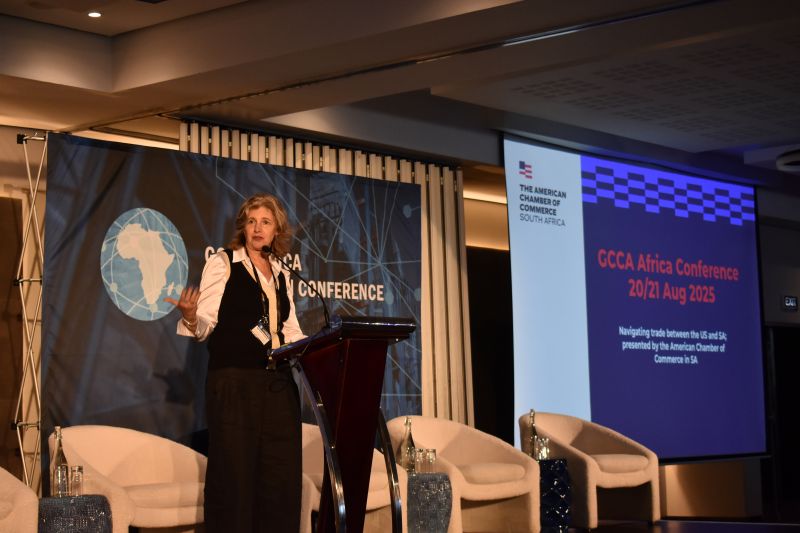
These dynamics are further complicated by global realignments. Michelle Constant, CEO of the American Chamber of Commerce in South Africa, noted a worrying trend: the downgrading or elimination of senior US diplomatic and commercial roles on the African continent, including within South Africa. At the time of her talk, no US ambassador had yet been appointed and only a chargé d’affaires was in place – a notable absence as economic and trade tensions rise.
One of the key concerns facing American companies – and by extension local industries like HVAC&R and cold chain logistics – is the sudden imposition of tariffs and trade barriers. As Constant pointed out, the average tariff rate for African exports to the US pre-2025 was just 2.2%. That has changed dramatically in recent months [and may change again before publication].
In response, the chamber is undertaking research to calculate not just the value American companies bring to South Africa, but also what value they offer back to the US economy. This shift in perspective is a strategic attempt to maintain relevance and leverage in ongoing tariff discussions.
Additionally, the infrastructure crisis at South Africa’s ports and railways, and the growing importance of trade corridors such as the Lobito Corridor (through Angola), were highlighted. “If we don’t get our own ports in order, we risk being bypassed,” Constant warned. For cold chain operators reliant on seamless, temperature-controlled export routes, this warning could not be more urgent.
Yet opportunities do exist. The Africa Continental Free Trade Area (AfCFTA), for instance, was flagged as a promising platform for South Africa to reposition itself within a regional trading bloc. “If you’re going to be actively non-aligned, it’s far more effective to do so as part of a trading bloc than alone.”
This raises new strategic pathways for the HVAC&R and cold chain industries. Could enhanced regional integration offer insulation from bilateral turbulence? Could cold chain infrastructure projects attract pan-African investment and public-private partnerships?
Risk mitigation and scenario planning become the new strategic imperatives
Amid the uncertainties, Constant stressed two imperatives: scenario planning and risk mitigation. Quoting insights from a recent Citibank Treasury roundtable, she warned, “If you think you’ve hit rock bottom with your scenario planning, go further. Because the lift goes down to the basement.”