
By Eamonn Ryan
In part two, we explore what this shift toward dispatchable renewable energy means for Africa’s cold chain, HVAC systems and temperature-controlled industries.
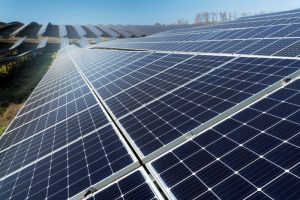
According to the Africa Solar Outlook 2026 published by the African Solar Industry Association (AFSIA), utility-scale solar generation costs in Africa have fallen to around R656.66/MWh. However, ensuring that electricity is available when demand exists increasingly requires storage.
AFSIA modelling indicates that converting daytime solar into fully dispatchable, round-the-clock power adds about R541.54/MWh, bringing the cost of 24-hour solar electricity to approximately R1 246.85/MWh.
“To make it completely dispatchable, we need storage and we need batteries. Declining battery prices have made storage economically viable, especially in Africa,” Van Zuylen said.
For cold chain operators, this price point is significant. Dispatchable solar power is now far cheaper than diesel generation, which can cost around R6 088.46/MWh, and offers predictable long-term energy costs – an important factor for food processors, exporters and pharmaceutical suppliers.
Implications for Africa’s cold chain and HVAC sector
Africa loses an estimated 30–50% of perishable food due to inadequate cold storage and unreliable electricity. Power instability remains one of the biggest barriers to expanding refrigerated logistics, agro-processing and vaccine distribution.
The shift toward dispatchable renewable energy directly addresses this challenge by enabling:
- Grid-independent cold storage in rural and peri-urban areas
- Reliable refrigeration at ports, packhouses and distribution hubs
- Stable power for hospitals, laboratories and pharmaceutical warehouses
- Electrification of large HVAC systems without increasing grid strain
By integrating storage at the project level, solar installations can support baseload cold chain operations, rather than being limited to daytime use.
Changing procurement rules and risk allocation
AFSIA notes that utilities and governments across Africa are increasingly procuring dispatchable capacity, rather than simply installed megawatts. Tender designs are evolving toward defined delivery profiles, such as evening peak supply – a capability traditionally met by fossil-fuel peaking plants.
This shift also changes risk allocation. When storage is integrated into renewable projects, developers can manage variability and curtailment risks internally, rather than passing them on to already stressed grids. This is especially relevant in countries with weak transmission networks, where voltage fluctuations and outages are common.
South Africa is cited as an early indicator of this trend, with public procurement increasingly specifying dispatchability alongside standalone battery energy storage programmes.
“In our region, storage is critically more important than in more mature markets. Storage means a lot more to us here in Africa than it does in any other region,” Van Zuylen said.
A foundation for resilient cold chains
Looking ahead, AFSIA expects storage-led procurement to become central to Africa’s energy transition. For the cold chain and HVAC sector, this represents a foundational shift: reliable, clean power is no longer a constraint, but an enabler.
As dispatchable renewable energy becomes mainstream, it has the potential to:
- Reduce post-harvest losses
- Improve food security
- Strengthen pharmaceutical supply chains
- Lower operating costs and emissions across temperature-controlled industries
In this context, falling solar and battery costs are not just an energy story – they are a cold chain resilience story, with wide-reaching economic and social benefits for Africa.