
By Eamonn Ryan
The 4th annual conference of the Global Cold Chain Alliance (GCCA) for Africa was held on 21 August 2025 in Umhlanga, KwaZulu-Natal.

While the conference itself was held on 21 August, the two days prior were themselves packed with cold chain activities.
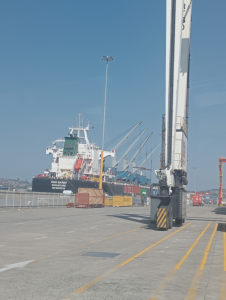
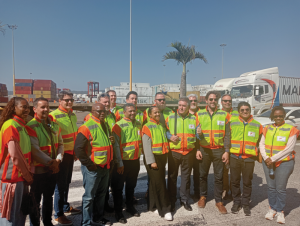
It commenced with a tour of Durban Container Terminal Pier Two, hosted by Transnet Ports Terminals (TPT) – a separate operating division responsible for handling cargo and providing logistics services at these ports, including operating the terminals where cargo is handled.
Durban Port eyes Cato Ridge and Bayhead to ease congestion via rail
TPT summarised dramatic improvements at Pier 2 since the low of 2023 (the full context of which will be provided in a following issue).
In addition, the body is accelerating plans to alleviate mounting pressure at the Durban Port by expanding its use of nearby back-of-port facilities – namely Cato Ridge and Bayhead – with a focus on shifting cargo from road to rail.
Officials said both facilities will play a vital role in addressing severe congestion challenges, particularly for refrigerated (reefer) containers. While Bayhead, located just five kilometres from the port, already handles short-haul rail transfers, its limited space means expansion will depend heavily on increasing throughput efficiency via rail.

However, the more promising site is Cato Ridge, situated further inland. “The further away the facility, the more benefit rail brings in terms of cost and decongestion,” said a senior port executive. “Truck-based back-of-port operations simply don’t solve the problem. Rail does.”
Transnet has revived its Bayhead terminal and is working with private sector partners to unlock the potential of Cato Ridge as a fully-fledged rail-connected hub. The site would serve as a drop-off point for exports and a collection site for imports – connected to the port by dedicated reefer rail services capable of moving 50 containers per train.
To finance these rail moves, Transnet is proposing a ‘green levy’ of R15–R25 per container collected by road, which would subsidise rail costs and promote sustainable freight movement.
With reefer volumes surging by nearly 30% this year, port authorities are pushing for immediate collaboration across the supply chain. “We need to move now. The system is under strain, and rail is our best relief valve,” said the official.
KHOLD opens doors to GCCA delegation
The delegates thereafter shifted venue to nearby KHOLD.

Kees Anton van Welie, managing director of cold chain logistics operation KHOLD, led a behind-the- scenes tour of the company’s advanced refrigerated distribution centre at Durban, as well as an overview of its three facilities across South Africa.
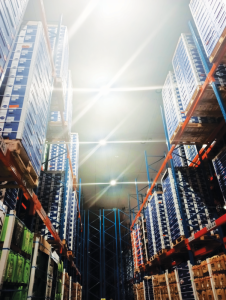
KHOLD (pronounced ‘cold’ rather than ‘K HOLD’)’s three major facilities each play a critical role in the country’s food supply chain. The tour site, in Bayhead, Durban’s largest refrigerated warehouse, said Van Welie. It is able to store about 16 000 pallets, with five multi- temperature cold rooms and blast freezer produce. It caters to both frozen food (down to -25 °C) and fresh produce (up to +10 °C) and also offers bonded warehousing and state veterinary inspection. Van Welie noted a recent shift in operations in this facility due to a Brazilian avian flu ban, which has reduced frozen chicken imports, and the business has responded with increased fresh produce volumes.
The Maydon Wharf, Durban, facility focuses on premium fruit cold storage. Located right on the quayside, it handles both refrigerated breakbulk vessels and reefer containers. It offers multi-temperature warehousing and on-site phytosanitary inspections for export markets across the EU, UK, China, Japan, India, Russia, Middle East and more.
Coega, Eastern Cape, is the world’s first fully integrated facility combining a packhouse, refrigerated storage and container depot under one roof.
Key capabilities:

- Packing: Advanced automated fruit packing (16 000m² facility) with de- greening and local-market lines.
- Cold storage: Accommodates up to 8 000 pallets in individually temperature- controlled cells – great for small consignments with precise control.
- Container depot: Supports 240 reefer plug-in points.
Energy efficiency is central to KHOLD’s mission, with facilities using 3MW/h of power daily to cool goods from 28°C to -6°C. “South Africa’s cold chain is evolving rapidly,” Van Welie said. “We’re adapting to global trade shifts while ensuring our infrastructure stays ahead of demand.”
Committee meetings and conference
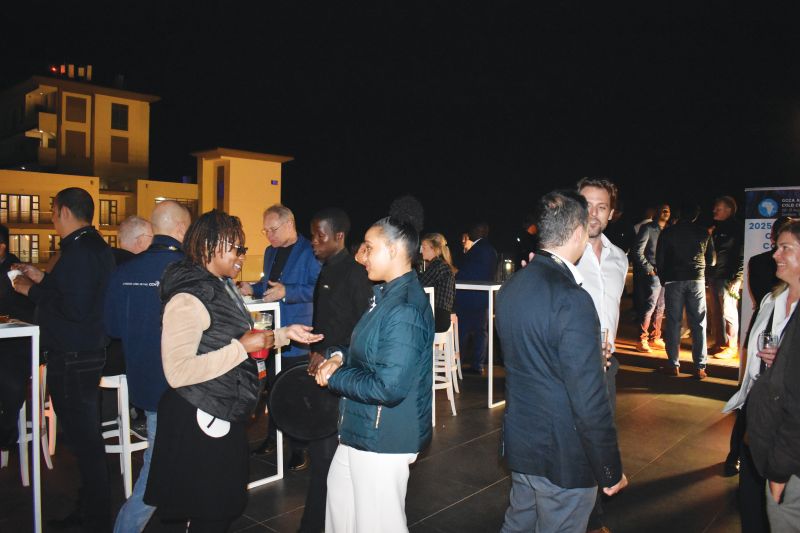
Registration for the conference commenced on the 19th at the venue, which also hosted three committee meetings and a modest exhibition, with a networking cocktail party in the evening kicking off conference activities themselves for members
Technology, collaboration and commitment to food security
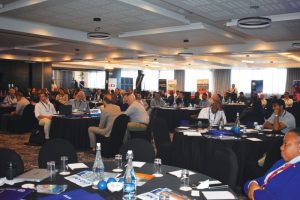
The conference itself focused on the critical role of cold chain infrastructure in enhancing food security, reducing waste and driving sustainable economic growth. This year’s theme, ‘Smart Cold Chain:
Harnessing AI for a Resilient and Sustainable Future’, set the tone for discussions around technology, collaboration and sector-wide transformation.
Paul Matthew, GCCA’s director for Africa, opened the event by reflecting on the remarkable progress made since the last conference. He pointed to initiatives across East and West Africa, including completed reports on load shedding, new mentorship and people development programmes, and increased engagement with government officials and regional bodies.
“This didn’t happen overnight. For years, our sector didn’t have a seat at the table. Now, we do – and it’s thanks to your commitment and the momentum we’ve built together.”
He emphasised the sector’s shift from being South Africa-centric to embracing a more pan-African approach, stressing the importance of unity and government collaboration to tackle infrastructure and regulatory bottlenecks.
Leadership from the top: GCCA president highlights global vision
Unable to attend in person due to travel conflicts, Sara Stickler, GCCA’s recently appointed president and CEO, delivered a video address in which she underlined the global importance of the cold chain and Africa’s central role in shaping its future.
“Africa is uniquely positioned to leverage emerging technologies like AI. From border management to temperature control, the opportunities are immense. But this progress must be backed by data, standards and investment,” Stickler said.
She introduced GCCA’s plans to expand data benchmarking, launch a centre of excellence for temperature-controlled supply chains, and strengthen the global committee model to ensure industry leaders are driving innovation and advocacy across regions.
The call for collective action with collaboration over competition
Adam Thocher, GCCA’s senior vice- president of global programmes and insights challenged attendees to move beyond siloed improvements: “We know why the cold chain matters. Now, the question is: how do we work together to make it work better?” he asked.
He highlighted persistent inefficiencies in the sector – like supply chain bottlenecks, fragmented data and unco-ordinated infrastructure investments – and offered collaboration as the solution. By pooling insights, sharing data and standardising systems across borders, Thocher argued, Africa’s cold chain industry could unlock its full potential.
He urged the audience to stop viewing technology as a competitive advantage, and instead treat it as shared infrastructure that strengthens the entire value chain.
“Food security in Africa will not be solved by individual company gains. It will be solved when competitors pool their knowledge, standards cross borders, and data becomes an industry resource,” Thocher said.
AI took centre stage at the conference, with speakers outlining its transformative power across cold chain logistics – from predictive maintenance and demand forecasting to IoT integration and blockchain traceability.
Thocher shared examples like the classic ‘beer game’, a supply chain simulation taught in business schools for decades, showing how AI can finally render such outdated models obsolete by accurately forecasting demand and improving regional flows. He emphasised how solar and hybrid energy systems – deployed through consortium models – could finally make rural cold chain infrastructure viable and sustainable.
A wake-up call and a rallying cry
Renier du Preez, CEO of Digistics and chair of the Africa Advisory Council, took the stage with a rallying call to the industry. “Yes, we can!” he led the room in chanting. He acknowledged the tough operating environment cold chain professionals face but also emphasised the tremendous opportunities ahead asthe continent grapples with urgent threats like animal disease outbreaks and global supply chain disruptions.
“We feed nations – and in fact, we feed an entire continent. This responsibility demands bold, co-ordinated action. Technology is not just an enabler; it is our lifeline.”
He emphasised the role of the GCCA as a platform for business-to-business collaboration, government engagement and innovation scaling, reminding attendees that the goal is not just business growth, but continental transformation.
A future built together
As the 2025 GCCA Africa Cold Chain Conference came to life, one message resonated above all: Africa’s cold chain industry is ready for its moment. And with collaboration, technology and vision, it can play a leading role in solving the continent’s most urgent challenge: food security.
With regional councils growing, investments increasing and new tools emerging every day, the GCCA and its partners are laying the groundwork for a smarter, stronger and more sustainable cold chain ecosystem across Africa.
Cold Link Africa will publish all the presentations either online or in future print issues.