
By Eamonn Ryan
Major ports record significant volume increases as operational performance improves across the container network. This is part one of a two-part series.
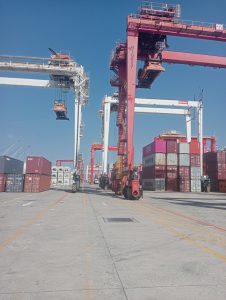
South Africa’s container terminals experienced a notable recovery in throughput during the week ending 24 May 2026, with several key facilities reporting substantial increases in cargo volumes.
According to the latest Cargo Movement Update released by the South African Association of Freight Forwarders (SAAFF) and Business Unity South Africa (BUSA), total container throughput reached 61 829 TEUs during the reporting period, reflecting a strong week-on-week improvement across the country’s port system.
Average daily throughput increased to 8 833 TEUs, highlighting improving operational conditions despite ongoing logistics challenges and occasional weather-related disruptions.
Growth recorded across major terminals
The recovery was driven by strong performances at several of South Africa’s leading container facilities. Ngqura Container Terminal recorded one of the largest increases in activity, while Cape Town Container Terminal and Port Elizabeth Container Terminal also posted significant gains. Durban Pier 1 maintained positive momentum with steady growth supported by stable berth occupancy and terminal operations.
The broad-based improvement suggests increasing efficiency across the container handling network and reflects continued efforts to improve vessel turnaround times and terminal productivity.
Durban remains the country’s logistics hub
Durban’s port facilities continued to play a central role in national cargo movement. While some fluctuations were recorded in waterside throughput at certain terminals, operational performance remained generally stable. Durban Pier 1 maintained steady container handling activity, supported by manageable stack occupancy levels and consistent truck servicing operations.
Rail freight activity on the Durban container corridor also showed encouraging growth, highlighting the increasing role of rail in supporting cargo movement and relieving pressure on road transport networks.
Ongoing landside challenges
Despite improvements within terminal operations, congestion on surrounding road infrastructure continues to affect overall logistics efficiency. The Bayhead precinct remains a key pressure point, with freight operators continuing to experience delays during peak operating periods. These challenges underline the importance of broader transport infrastructure improvements to support growing cargo volumes.
While terminal performance has improved, the report indicates that end-to-end supply chain efficiency still depends heavily on the effectiveness of supporting road and rail networks.
Positive momentum, but work remains
The latest figures provide encouraging evidence that South Africa’s ports are making progress in improving operational performance and handling increasing trade volumes. However, efficient cargo movement depends on more than terminal productivity alone. Beyond the ports themselves, regional freight operators continue to face border delays, air cargo fluctuations and international trade disruptions that affect the broader logistics ecosystem.
These wider challenges are explored in part two of this series.
Source: Adapted from the SAAFF/BUSA Cargo Movement Update for the week ending 24 May 2026.