
By Eamonn Ryan
A potential boost for agriculture and cold chain.
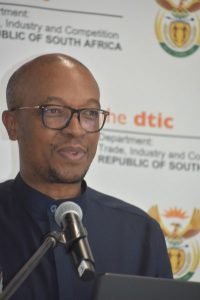
South Africa’s recent trade developments could bring significant benefits to the agricultural and cold chain sectors, potentially boosting exports, reducing costs and opening new opportunities for growth. Speaking at the Group of 20 (G20) Leaders’ Summit, South Africa’s Minister of Trade, Industry and Competition, Parks Tau, outlined the country’s progress in international trade negotiations, emphasising multilateral co-operation and Africa’s growing strategic role.
The summit, held under the theme ‘Solidarity, Equality and Sustainability’, focused on overcoming global diplomatic challenges, particularly in trade, amid the absence of the US. Early in the summit, the G20 Johannesburg Leaders’ Declaration was adopted, breaking with tradition to address pressing issues such as the climate crisis, inequality, financial reform and inclusive growth, with a strong emphasis on Africa and the Global South.
Tau highlighted a particularly notable development: Chinese Premier Li Qiang’s commitment to collaborating with South Africa on multilateral trade and implementing a zero-tariff initiative for South African products. During a meeting with President Cyril Ramaphosa before the summit, Qiang expressed Beijing’s readiness to support Pretoria in safeguarding the multilateral trading system and advancing this zero-tariff policy.
“We welcome China’s introduction of a zero-tariff regime. In practice, this is applied immediately for developed countries. For developing countries, China has indicated that implementation will align with the World Trade Organization’s Most Favoured Nation principle. We are actively engaging with them on this basis,” Tau said.
South Africa will continue engaging with stakeholders, including labour, civil society, and business, to ensure smooth implementation. Tau anticipates that a formal agreement with China will be reached soon, marking a significant step for trade and economic development.
While the US’ non-attendance was a notable absence, Tau said the G20 outcomes remain important for global trade, the World Trade Organization, and rules-based systems, as well as development financing and debt relief. He emphasised Africa’s increasingly prominent role in global trade discussions and the importance of translating summit outcomes into concrete actions through bilateral agreements and multilateral platforms.
“The Africa agenda is now firmly on the table, and we are looking at concrete mechanisms for implementation, while also monitoring progress driven by other countries,” Tau said.
Source: SAnews.gov.za