
Reliable transport infrastructure is one of the biggest constraints on Africa’s cold chain. Every delay at a border, congested port or inefficient freight corridor increases energy costs, shortens product shelf life and raises the risk of temperature excursions for food, pharmaceuticals and other sensitive cargo. A new R259-billion partnership between South Africa and the African Export-Import Bank (Afreximbank) aims to tackle many of these structural bottlenecks, creating faster, more efficient trade routes that could significantly strengthen temperature-controlled logistics across the continent.
Afreximbank
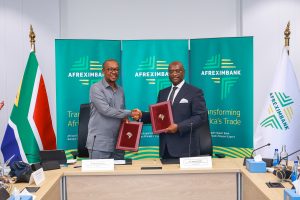
South Africa’s Department of Trade, Industry and Competition (the dtic) has signed a country partnership programme with Afreximbank worth R259-billion to support large-scale investment in transport, logistics and other trade-enabling infrastructure.
The initiative is designed to unlock long-term financing for projects that improve freight movement between manufacturing centres, logistics hubs and export gateways, while supporting implementation of the African Continental Free Trade Area (AfCFTA).
For the cold chain sector, stronger transport corridors have the potential to reduce transit times, improve delivery reliability and lower the operational costs associated with refrigerated transport and storage. More efficient infrastructure also helps minimise spoilage and product losses, particularly for fresh produce, meat, seafood, pharmaceuticals and vaccines that depend on uninterrupted temperature control.
George Elombi, president and chairman of the board of directors of Afreximbank, said the programme would mobilise long-term capital for transport, logistics and other infrastructure needed to enhance Africa’s export competitiveness.
According to minister of trade, industry and competition Mpho Parks Tau, the partnership also supports South Africa’s broader industrial development strategy while strengthening regional value chains.
“The memorandum of understanding seeks to advance the implementation of the African Continental Free Trade Area by promoting stronger regional value chains and addressing cross-border constraints that continue to inhibit the free flow of goods, services and capital,” Tau said.
Although transport and logistics infrastructure form a central pillar of the programme, investment will also extend to manufacturing, energy, mining, special economic zones and industrial parks.
The dtic believes the partnership will reinforce South Africa’s role as a regional logistics gateway while improving trade efficiency across the continent. For businesses operating in the African cold chain, improved freight infrastructure and more resilient trade corridors could provide the foundation for expanding temperature-controlled trade under the AfCFTA, supporting growth in agriculture, food processing, pharmaceuticals and other high-value sectors.
Source: Afreximbank