
By Eamonn Ryan
For South Africa’s cold chain sector, the R1.9-trillion National Rail Master Plan could be transformative. A more reliable and expanded rail network has the potential to shift significant volumes of temperature-sensitive goods – particularly fresh produce, citrus and other perishables – off congested roads and onto more efficient, cost-effective rail corridors. This would not only reduce spoilage risk and transit times but also improve export competitiveness by stabilising logistics costs and enhancing the predictability of delivery schedules into key ports and international markets.
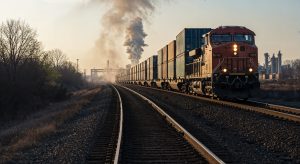
Government is seeking to reposition rail as the backbone of the country’s logistics and mobility system by 2050. The scale of the plan was outlined by Department of Transport chief director David de Villiers at its official launch by Transport Minister Barbara Creecy, underscoring both the magnitude of the challenge and the urgency of intervention.
The plan includes approximately 3 600km of new rail infrastructure across freight and passenger networks. While the total cost is substantial, De Villiers framed it in the context of South Africa’s R7.3-trillion economy, noting that a hypothetical 10-year rollout would require annual spending of R190-billion – equivalent to around 70% of current public infrastructure expenditure.
“That level of funding is not realistic from government alone,” he said, emphasising that private sector participation will be essential to delivering the programme.
Unlocking unmet demand
At present, South Africa’s rail network transports roughly 165 million tonnes of freight annually – far below the estimated market demand of 280 million tonnes. According to Creecy, this gap has far-reaching economic consequences.
Underperforming rail capacity limits exports in key sectors such as mining and agriculture, leading to lost foreign exchange earnings and job opportunities. At the same time, the shift of freight to road transport increases congestion, accelerates road deterioration and raises safety risks.
In the commuter sector, inadequate rail services force millions of South Africans onto congested road networks, increasing transport costs and eroding disposable income.
An efficient rail system, Creecy said, would reduce household transport costs, shorten travel times, improve safety and expand access to economic opportunities – particularly for lower-income communities.
Economic case for investment
Despite the high capital requirement, government argues that the economic returns justify the investment. De Villiers said the cost of failing to modernise the rail network is already significant – estimated at 3.8% of GDP.
This includes around R177-billion in lost export earnings, as well as nearly R100-billion in inefficiencies caused by moving goods via road rather than rail. “The plan passes a fundamental test: the benefits outweigh the costs,” he said.
Economic modelling suggests that large-scale rail investment would generate direct, indirect and induced benefits across the economy. These include construction activity, supply chain demand for materials such as steel and cement, and increased household spending.
Even modest gains in rail’s share of freight – from around 170 million tonnes to 230 million tonnes annually – could yield savings of roughly R40-billion through reduced road congestion, fewer accidents and lower emissions.
Global context and funding model
While R1.9-trillion is a significant figure domestically, De Villiers noted that global rail investment is far larger, with trillions of rand expected to be spent internationally over the next decade.
Funding for South Africa’s plan will rely on a mix of mechanisms, including private sector investment, concessioning, outsourcing and rolling stock leasing. Government will retain ownership of core rail infrastructure, while opening the network to broader participation.
Consultations on the draft master plan are expected to take place over the coming months, with the final version scheduled to return to cabinet later this year.