
By Eamonn Ryan, with technical input by Bracken Refrigeration Services (BRS) project manager Morné Seymore
Behind the scenes, preserving potato quality is a sophisticated undertaking. Temperature, humidity, airflow and atmosphere management all determine whether potatoes retain their quality and viability for months after harvest.
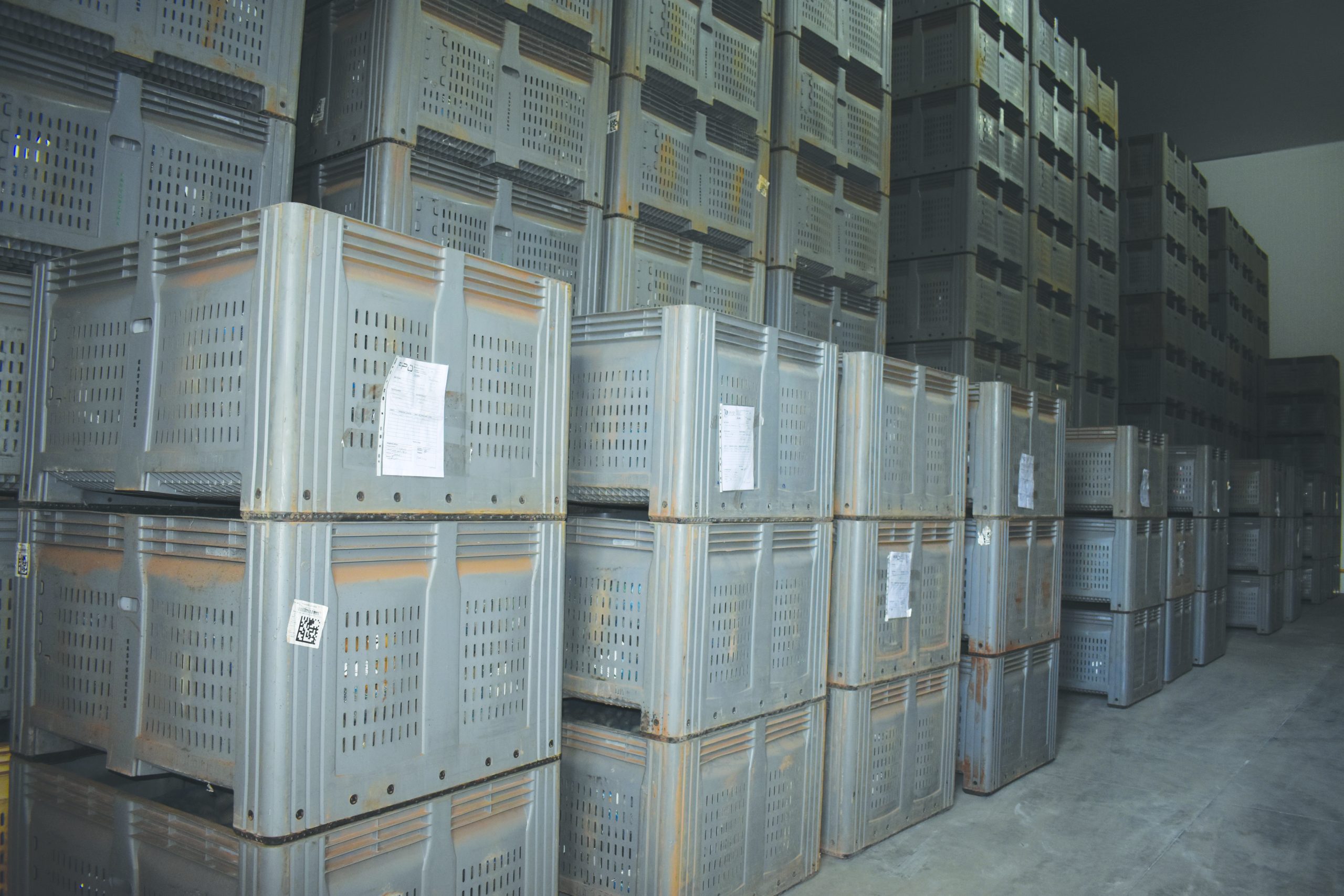
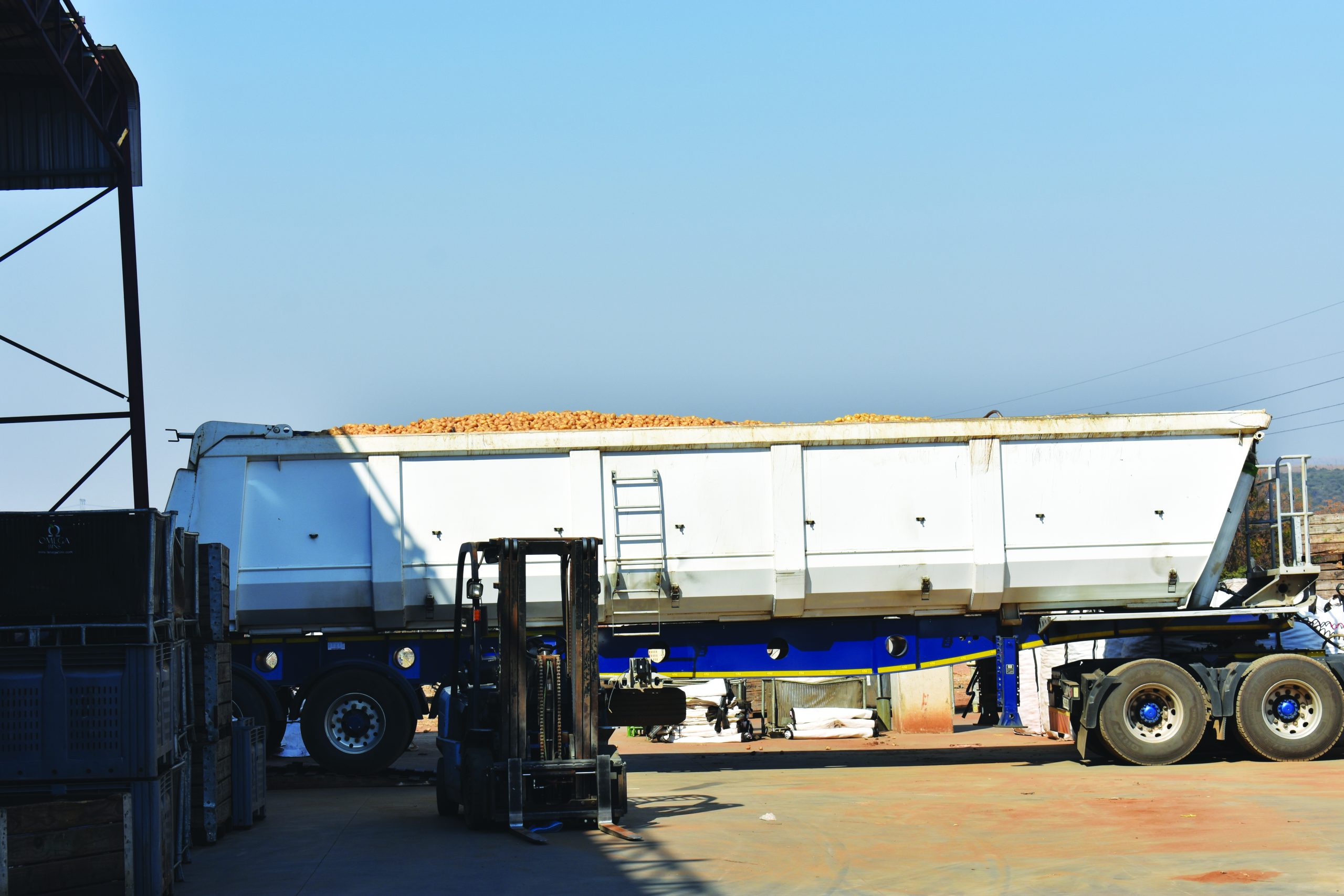


At Easy Greens Farming near Hammanskraal, those variables have driven the development of a new generation of high-capacity potato cold stores designed specifically for the long-term storage of seed and processing potatoes. The project combines modern refrigeration technology, innovative airflow design and carefully controlled operating practices to deliver storage conditions that can preserve product quality for up to eight months.
What makes the project particularly interesting is that it is neither a straightforward new-build nor a conventional retrofit. Instead, it represents the phased modernisation of an existing cold storage operation. Today, the facility comprises four new high-capacity rooms of approximately 900 tonnes each, alongside an existing 600-tonne room and five older first-generation stores dating back more than two decades. Plans are already being considered for the addition of at least two further rooms as demand and budgets permit.
For Bracken Refrigeration Services (BRS) project manager Morné Seymore, the project presented both technical and logistical challenges. Tight delivery schedules, high product densities and the unique storage requirements of potatoes demanded a solution centred not simply on refrigeration capacity, but on understanding the biology of the product itself.
Potatoes continue to respire after harvesting, producing heat and carbon dioxide while remaining highly sensitive to temperature fluctuations and dehydration. Designing around those characteristics has shaped virtually every aspect of the Easy Greens Farming installation.
The project began in September 2025 when Easy Greens Farming approached BRS with an urgent requirement for additional refrigeration capacity. Initially, a single room was constructed as both a proof of concept and an immediate operational requirement. Within approximately two to three weeks, the refrigeration equipment had been sourced, delivered and installed, with commissioning delayed only by the time required to bring utility power to the new facility.
The success of that first installation quickly led to the commissioning of four additional rooms, substantially expanding the site’s specialised storage capabilities.
Rather than viewing the project as simply adding refrigeration capacity, Easy Greens Farming has approached it as the development of a specialised potato storage hub capable of servicing multiple downstream markets.
The facility stores seed potatoes destined for planting programmes, processing potatoes supplied to major chip manufacturers and potatoes intended for retail distribution and the site’s own chip shop operations. Individual rooms can be dedicated to the produce of specific farms, simplifying logistics, traceability and product segregation while reducing cross-contamination risks between varieties and storage requirements.
DESIGNING FOR A LIVING PRODUCT
At the heart of the design brief are four interconnected requirements: temperature control, humidity management, airflow distribution and atmosphere control.
Achieving the correct storage temperature is critical, but equally important is how that temperature is reached.
Potatoes cannot simply be shock-cooled immediately after loading. Seed potatoes are particularly sensitive to thermal stress and rapidly reducing their temperature risks compromising product quality and viability.
Instead, temperatures are gradually reduced over several days. Control systems typically begin with room temperatures around 10–11°C before reducing the setpoint by approximately one degree per day until the final storage temperature of around 3°C is achieved.
This gradual pull-down profile protects the seed while allowing the refrigeration system to progressively remove both field heat and respiration heat from the product mass.
Maintaining temperatures below approximately 4°C has proven particularly important. The site’s older cold stores experience difficulties maintaining low temperatures when fully loaded, frequently stabilising between 4°C and 5°C when handling 500 to 600 tonnes of product. While such temperatures may appear only marginally higher, they can affect storage life.
Instead of maintaining seed quality for the intended six to eight months, storage periods can be reduced to four or five months when temperatures remain above specification. One of the principal objectives of the new installations has therefore been to provide reliable 3°C storage conditions irrespective of product load.
Temperature control alone, however, represents only one component of successful potato storage.
Humidity management is equally important. Potatoes naturally lose moisture during storage and excessive dehydration directly affects both product quality and weight loss. The installation therefore targets relative humidity levels between approximately 90% and 95%, creating conditions that minimise dehydration while preserving product quality throughout extended storage periods.
Achieving these humidity levels becomes increasingly challenging within large storage chambers containing dense product loads. Maintaining both humidity and temperature uniformity across 900 tonnes of potatoes requires careful attention to airflow design.
MOVING AIR WHERE IT MATTERS MOST
Perhaps the most distinctive feature of the project is its four-stage airflow concept.
Traditional cold rooms frequently rely upon evaporators positioned near the ceiling blowing cold air across the upper regions of the room. While this approach may prove adequate for smaller installations, it becomes increasingly problematic when dealing with large product masses stacked to significant heights.
Warm pockets can develop within densely packed crates or bulk bins while temperature stratification results in uneven product conditions throughout the room.
The installation addresses this challenge through a carefully designed air distribution system comprising large evaporator coils, canvas ducting and floor-level airflow tubes.
Each large room incorporates four evaporator units suspended near roof level. These substantial coils each weigh approximately 650kg and are responsible for delivering the refrigeration capacity required to maintain room conditions.
Cold air discharged by the evaporators enters a system of fabric ducts extending throughout the room before being directed into floor-level tubes positioned to force air through the stacked product itself.
Rather than allowing cold air simply to circulate around the potatoes, the system compels airflow through the product mass. The air subsequently returns to the evaporators, completing the circulation cycle.
The result is significantly improved temperature uniformity throughout the room while ensuring efficient removal of both sensible heat and the respiration heat continually generated by stored potatoes.
Importantly, this airflow concept was not developed solely for the new facilities. Following successful trials, elements of the system have already been retrofitted into one of the site’s older stores, confirming measurable improvements in airflow distribution and product conditions.
Atmosphere management represents another critical design consideration. Potatoes remain biologically active throughout storage, continually producing carbon dioxide as part of their natural respiration processes. Left unmanaged, elevated CO₂ concentrations negatively affect both product quality and storage life.
The installation incorporates dedicated CO₂ extraction systems designed specifically to manage this phenomenon. Because carbon dioxide is denser than air, it naturally accumulates near floor level. Extraction points are therefore positioned low within the rooms to remove CO₂-rich air efficiently.
Simultaneously, fresh air is introduced through higher-level inlets, replacing extracted air while maintaining suitable storage conditions.
During these extraction cycles, refrigeration operation is temporarily suspended. Rather than attempting simultaneously to cool incoming ambient air and ventilate the room, compressors and evaporators are briefly switched off before recommencing operation once atmosphere management has been completed.
This relatively simple control strategy reduces unnecessary compressor loading while contributing to improved energy performance and equipment longevity.
Ethylene management presents an interesting contrast. While BRS also constructs banana ripening facilities where ethylene is deliberately introduced to stimulate ripening, potato storage demands precisely the opposite approach. Ethylene is excluded entirely from these rooms to preserve product quality and storage performance.
MODULAR REFRIGERATION SIMPLIFIES EXPANSION
Supporting these sophisticated storage conditions is an equally substantial refrigeration infrastructure.
Instead of constructing a traditional central plant room, the project utilises modular packaged refrigeration units supplied pre-assembled by specialist manufacturers.
Each package incorporates compressors, condensers and electrical switchgear within compact outdoor housings, substantially simplifying site installation.
From an installation perspective, the approach offers considerable advantages. Main electrical supplies are connected to the packaged units before refrigerant pipework links the outdoor plant to the evaporators within the cold rooms. The result is a repeatable and highly streamlined installation process that significantly reduces commissioning time.
Standardisation also offers operational benefits. Similar equipment platforms have been employed across multiple projects undertaken by BRS, reducing design variations while simplifying maintenance and fault diagnosis.
The cold room envelope itself has been designed specifically for the considerable physical dimensions of the installation. With internal heights approaching nine metres and storage capacities of approximately 900 tonnes per room, structural considerations become increasingly important.
The project utilises 150mm insulated panels throughout the larger chambers, providing both improved thermal performance and enhanced structural rigidity when compared with thinner alternatives.
Maintaining structural stability becomes particularly important when considering both the considerable dimensions of the rooms and the substantial weight of the suspended evaporators.
Installation presented several practical challenges. The evaporator coils required careful lifting operations utilising specialised scissor lifts before being secured both to the main roof structure and secondary support frameworks specifically designed to accommodate their concentrated loads.
Forklift capacity also emerged as an unexpected constraint. Initial equipment proved inadequate for manoeuvring heavier plant components as well as the narrow access route, necessitating the introduction of larger four-wheel-drive machines capable of positioning both refrigeration packages and other substantial equipment.
Operational considerations extend beyond installation. Existing forklifts are currently unable to access the uppermost storage levels within the tallest rooms, effectively sacrificing two potential rows of storage until higher-reaching equipment is introduced.
Electrical infrastructure has similarly required significant upgrading. Growing refrigeration loads have necessitated the installation of a mini substation to support both existing operations and planned future expansion. Co-ordinating civil, mechanical and electrical works while maintaining ongoing site operations remains an important component of the project’s phased implementation strategy.
PRECISION STORAGE DELIVERS LONG-TERM VALUE
Although detailed energy performance figures were not yet available, numerous design decisions collectively contribute towards improved efficiency.
Better insulation reduces conductive heat gains while larger storage volumes improve the relationship between refrigeration capacity and stored product tonnage.
More importantly, improved airflow distribution minimises the tendency to over-cool portions of a room simply to achieve specification elsewhere. By delivering cold air through the product mass itself, the system achieves more uniform conditions while reducing unnecessary compressor runtime associated with temperature inconsistencies.
Perhaps the greatest sustainability benefit, however, lies in preserving product quality itself. Extending seed potato storage life from four or five months towards the intended six to eight months represents a significant reduction in food and agricultural waste.
Every tonne of seed successfully preserved represents savings in land utilisation, water consumption, agricultural inputs and downstream production losses.
Easy Greens Farming operates primarily as a specialised cold storage business rather than a farming enterprise. Farmers contract with the company to store their produce while downstream clients include major processing organisations with exacting product specifications.
Meeting these requirements demands considerably more than simply maintaining a cold room temperature. Successful potato storage depends upon understanding the interaction between refrigeration engineering and product biology.
The Easy Greens Farming project demonstrates precisely that philosophy. From staged temperature pull-down profiles and carefully managed humidity levels to sophisticated airflow distribution and atmosphere management, every aspect of the design reflects a product-centred approach to refrigeration.
As further rooms are constructed as budget becomes available, and elements of the new designs are progressively introduced into older facilities, the project provides an instructive example of how modern cold storage can evolve beyond simple refrigeration capacity towards precision environmental control.
For potatoes destined either to become next season’s seed crop or tomorrow’s packet of crisps, those few degrees of temperature, carefully managed airflow patterns and precisely controlled atmospheric conditions can ultimately determine the difference between product success and product loss.