
By Eamonn Ryan
This is a two-part series. Part one examined the supply-side constraints, including domestic reserves, pipeline dependence, and Mozambique’s LNG projects, providing context for why South Africa is facing a potential gas shortage. Part two will explore the sectoral implications, highlighting how gas scarcity and price volatility are driving the shift toward electrification, heat pumps, solar integration, and other innovative HVAC&R solutions that offer resilience and energy efficiency in an uncertain gas market.
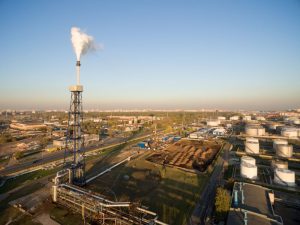
For the HVAC&R and industrial cooling sectors, the implications of this timeline are substantial. Gas will remain in the South African energy mix, but its availability will be constrained and its pricing increasingly influenced by international LNG markets rather than regional pipeline contracts. This undermines the traditional cost advantage of gas for process heat, commercial water heating, and absorption-based cooling systems. Industrial operators relying on gas-fired boilers, gas-driven refrigeration compressors or gas absorption chillers may face operational uncertainty unless long-term, firm gas supply contracts are secured – something likely to be difficult until the regional import and LNG terminal infrastructure improves.
As a result, the sector is already moving towards electrification, driven both by necessity and by improvements in efficiency technologies. Heat pumps, in particular, offer strong technical advantages. Their coefficient of performance (COP) in commercial settings routinely ranges between 3 and 5, making them significantly more energy-efficient than resistance heating and competitively efficient compared with gas under most pricing scenarios. When integrated with solar PV or optimised for off-peak use, heat pumps present a compelling, future-proof solution for hotels, hospitals, food-processing plants and industrial facilities with year-round thermal loads.
Solar thermal and hybrid solar–heat-pump systems are increasingly attractive as well, especially in regions with stable insolation and for operations where predictable daytime hot-water demand aligns well with solar resource availability. Meanwhile, refrigeration and cooling technologies are undergoing parallel improvements. CO₂ transcritical systems, high-efficiency variable-speed compressors, demand-responsive controls, and thermal storage integration all minimise energy consumption and reduce exposure to supply instability in any single energy carrier – including gas.
In the longer term – roughly from the early-to-mid 2030s onward – Mozambique’s LNG build-out could reopen the case for gas within the HVAC&R landscape. If South Africa develops LNG import facilities at ports such as Coega, Saldanha or Durban, and if regional distribution infrastructure expands accordingly, gas may once again become a stable and potentially cost-competitive option for specific heating and cooling applications. However, even in this scenario, the global decarbonisation agenda and the rapidly improving economics of electrified heating and cooling suggest that gas will not re-establish itself as a dominant energy vector for the sector. Instead, it may complement a diversified, low-carbon energy mix rather than define it.
In summary, Mozambique’s LNG projects represent a significant long-term opportunity for the wider region, but they do not alter the immediate reality: South Africa faces a multi-year period of constrained gas supply. For the HVAC&R sector, the prudent response is to prioritise electrification, efficiency and solar-integrated solutions – technologies that offer resilience, lower lifecycle costs and insulation from volatile gas markets. Gas may regain relevance later, but the trajectory for the foreseeable future is unmistakably toward electricity-driven thermal solutions.
Sources:
All information in this article is sourced from the following materials:
- City Energy: overview of South Africa’s gas resources and reserve estimates.
- Development Bank of Southern Africa (DBSA): Natural Gas Briefing Paper (2016) – South African reserve estimates and supply constraints.
- Department of Mineral Resources and Energy (DMRE): Gas Master Plan Basecase Report – national gas demand and supply dynamics.
- Actuarial Society of South Africa: briefing on South Africa’s electricity and gas system, noting depletion of certain domestic fields.
- Mail & Guardian: analysis of South Africa’s reliance on Mozambique and implications for energy security.
- FurtherAfrica: report on Mozambique gas decline and South Africa’s supply risks.
- Sunday Times (TimesLIVE): warnings from industry bodies regarding the imminent ‘gas cliff’.
- News24 (Chris Yelland): coverage of Sasol’s synthetic-gas bridging plan for 2028–2030.
- Trade & Industrial Policy Strategies (TIPS): policy briefing on domestic gas discoveries and commercialisation challenges.
- Reuters: reports on TotalEnergies’ exit from South African offshore Block 11B/12B and the status of gas investments.
- BusinessTech: analysis of gas-supply risks and the electricity–gas interplay in South Africa.
- Press reporting and company statements on Coral Sul FLNG, Coral Norte FLNG and TotalEnergies’ Area 1 LNG project in Mozambique.