
By Eamonn Ryan
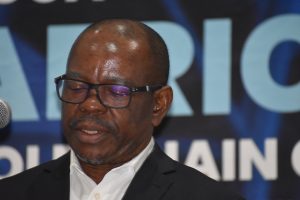
At the GCCA Africa 2026 Conference in Johannesburg, GCCA Africa chairman Newton Matope (CEO of Cold Solutions Africa) made it clear that Africa’s cold chain future will be shaped not in side conversations, but through structured, sustained collaboration. His opening address introduced the newly formed Africa Regional Council as the engine for that collaboration – an industry-led body tasked with turning real-world challenges around energy, skills, capital and regulation into a focused, continent-wide agenda.
© Cold Link Africa
Effective collaboration needs structure. In Africa, that structure is the GCCA Africa Regional Council – a body deliberately designed as a two-way conduit between industry and association.
Instead of GCCA setting an agenda in isolation, the council invites operators, investors, and stakeholders to directly influence regional strategy, advocacy, and training. It is a move away from one-directional ‘we talk, you listen’ to genuine dialogue, where feedback, disagreement, and local nuance shape what gets done.
Within that framework, four structural priorities have emerged, cutting across almost every conversation GCCA has in the region:
- Energy reliability and resilience
In many GCCA regions around the world, power is a line item on the budget. In much of Africa, it is a design constraint.
Cold chain operators face unstable grids, frequent outages, and rising energy costs. Here, resilience and solar integration are not ESG buzzwords – they are the difference between:
- Holding temperature or losing a pallet, and
- Maintaining a viable margin or seeing profitability erased.
GCCA’s commitment is to bring global best practices in clean, resilient power – from system design to operational models – to African operators navigating these conditions.
- Human capital and technical expertise
The most advanced facility is only as reliable as the people who run it. Across the continent, there is a persistent shortage of qualified technicians, quality managers, and cold chain operators. Every operator is investing in training, only to see talent poached by competitors down the road. This is not a sign of healthy competition; it is evidence of systemic undersupply of skills.
The shared training model piloted in East Africa offers a path forward: pooling demand, sharing cost, and delivering to a recognised standard without overburdening any single balance sheet. Replicating and scaling this approach could transform the skills landscape continent-wide.
- Capital and investment scale
Cold chain infrastructure is capital-intensive. High upfront capex remains one of the primary brakes on expanding capacity. For investors and financiers, cold chain is not a niche – it is the backbone of agricultural transformation and food security in Africa. GCCA’s role is to help de-risk this capital by:
- Professionalising operations
- Standardising skill sets
- Providing market intelligence
The projects exist. What is often missing is bankability, not ambition.
- Regulatory harmonisation and the AfCFTA opportunity
Weak, outdated, or misaligned regulation is a silent tax on the cold chain. Perishable goods remain stuck at borders due to fragmented food safety standards and inconsistent documentation demands. A truck crossing three borders should not face three different temperature and paperwork regimes. Every inconsistency adds time, cost and risk.
The African Continental Free Trade Area (AfCFTA) presents a historic opportunity to align cold chain standards and create frictionless borders for perishable goods. GCCA is already making that argument to policymakers, but it needs data and engagement from operators to do it effectively.
These four pillars – energy, skills, capital and regulation – are not abstract policy themes. They are the daily realities of everyone sitting in the GCCA Africa conference room.
If these are the structural priorities, then the next question is: how do individual businesses stop facing them alone? The answer lies in rethinking the role of membership and association – moving from isolated operators to an integrated ecosystem with shared risk, shared standards, and shared opportunity.