
By Eamonn Ryan
On the Apple podcast From The Cold Corner, Michael Levitt, editor of Refrigerated & Frozen Foods, spoke with Marc Gieseking of Güntner about why heat pumps are gaining traction – and what that means for processors, manufacturers and cold storage providers.
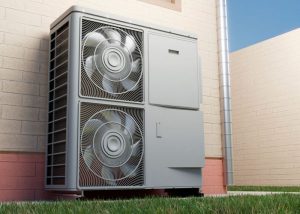
The cold chain has always been energy intensive. From blast freezers to distribution centres, refrigeration systems and hot water processes run around the clock – often powered by natural gas or other fossil fuels. But a powerful shift is underway.
According to a recent study by McKinsey & Company, the global heat pump market is expected to grow by more than 15% annually, with particularly strong momentum in the food and beverage sector. Industrial heat pumps – once considered niche or supplemental – are quickly becoming central to cold chain decarbonisation strategies.
The takeaway: industrial heat pumps are no longer optional innovations. They are rapidly becoming a core infrastructure investment.
Electrification is reshaping industrial energy
Traditional industrial heating systems rely on coal, oil, or natural gas boilers. Industrial heat pumps, by contrast, use electricity as their energy source. That distinction is more than technical – it is transformational.
As grids become greener and renewable energy penetration increases, electrified systems allow companies to dramatically reduce Scope 1 emissions and potentially lower Scope 2 emissions as well. When powered by renewable electricity, industrial heat pumps can operate with near-zero direct carbon output.
Efficiency is another driving force. At low and medium temperature ranges common in food production, industrial heat pumps can be up to five times more efficient than traditional boiler systems. That means more usable heat output per unit of energy input – translating to lower operating costs over time.
For cold chain operators facing tight margins and rising energy prices, that efficiency gain matters.
Sustainability is now a business imperative
What’s accelerating adoption isn’t just technology – it’s policy and economics.
Governments across Europe and other regions are offering substantial subsidies for industrial heat pump installations. In Germany, for example, support programmes administered by the Federal Office of Economics and Export Control can subsidise up to 70% of installation costs for qualifying industrial systems.
That level of financial support dramatically improves payback timelines – but of course this is not the case in South Africa.
Regulatory pressures are also increasing. Carbon reporting requirements, emissions reduction targets, and refrigerant regulations are pushing food manufacturers and logistics providers to rethink their thermal systems. Heat pumps provide a viable pathway to compliance while strengthening long-term energy resilience.
OEMs, meanwhile, are under pressure to expand their offerings and integrate heat pump-ready solutions into broader refrigeration systems. As Gieseking noted, industrial demand is helping shape the next generation of equipment design.
Not a new technology – but a newly strategic one
Industrial heat pumps are not new. The underlying thermodynamic principles have been understood for decades. What has changed is context.
Energy prices are volatile. Climate commitments are public. Customers and retailers are scrutinising sustainability claims. And electrification is becoming central to industrial policy in many countries.
In this environment, heat pumps shift from being a technical option to a strategic lever.
Cold storage facilities, for example, produce large amounts of excess heat during refrigeration processes. Historically, much of that heat was simply rejected into the atmosphere. Industrial heat pumps can capture and upgrade that waste heat, repurposing it to generate hot water for sanitation, processing or even district heating networks.
Instead of being purely energy consumers, cold chain facilities can become energy hubs.
Industrial versus residential: a different scale entirely
It’s important to distinguish industrial heat pumps from the residential systems many consumers are familiar with.
Residential systems typically range from 5 to 35 kilowatts and are often designed as compact, plug-and-play units. Industrial heat pumps, by contrast, can scale up to 30MW or more. They often require dedicated mechanical spaces or entire buildings, custom engineering, and integration with refrigeration, cooling and process systems.
Investment levels are significantly higher – but so is lifespan. Industrial systems are often designed to operate for 20 to 25 years, aligning with long-term facility planning.
This is infrastructure, not an appliance.
Renewable-ready and future-proof
Another advantage of industrial heat pumps is future flexibility.
Because they are powered by electricity, operators can progressively decarbonise operations as renewable energy procurement increases. Facilities can pair heat pumps with on-site solar arrays, renewable energy purchase agreements, or grid-based green energy programmes.
This flexibility insulates businesses from future fossil fuel price spikes and carbon taxes.
In addition, many modern industrial heat pump systems utilise natural refrigerants such as CO₂ or ammonia, further enhancing environmental performance and reducing global warming potential concerns.
A competitive edge in a carbon-constrained world
The cold chain’s energy footprint is under growing scrutiny. Retailers, regulators and investors are demanding measurable reductions in carbon intensity.
Industrial heat pumps offer a rare combination of environmental and financial benefits: improved efficiency, electrification potential, regulatory alignment and long-term operational savings.
Adoption does require thoughtful planning, engineering expertise and regulatory co-ordination. But as subsidies expand and technology advances, barriers are lowering.
The question for many cold chain operators is no longer whether heat pumps make sense – it’s whether they can afford to delay implementation.
As the market accelerates and policy frameworks tighten, industrial heat pumps are positioned to become a defining technology in the next generation of sustainable food production and cold storage infrastructure.
The cold chain has always been about temperature control. Increasingly, it’s also about carbon control.