
By Eamonn Ryan
District heating, electrification and industrial energy reuse.
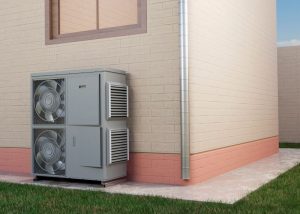
As discussed on the Apple podcast, From The Cold Corner platform, between Michael Levitt and Marc Gieseking of Güntner, the next phase of industrial heat pump development extends beyond internal efficiency gains.
The most advanced projects position cold storage and food production facilities as active contributors to local energy networks – transforming them into energy hubs.
District heating from refrigeration systems
In some regions, operators are exploring how upgraded waste heat can be exported to district heating networks.
District heating from refrigeration works by:
- Capturing excess refrigeration heat
- Upgrading it via industrial heat pumps
- Delivering usable thermal energy to nearby residential or commercial buildings
The model mirrors emerging strategies used by data centres. Instead of venting excess heat, municipalities are increasingly connecting high-load facilities into district systems.
Cold storage sites offer unique advantages:
- Year-round operation
- Relatively stable heat loads
- Continuous refrigeration demand
These characteristics make them attractive anchors for industrial energy reuse initiatives.
However, implementation requires co-ordination across:
- Zoning regulations
- Noise compliance
- Infrastructure alignment
- Utility partnerships
Industrial zones are not always adjacent to residential developments, and retrofitting district networks demands multi-stakeholder planning.
Nevertheless, the long-term potential is significant. Cold chain facilities can evolve from isolated industrial assets into integrated community energy contributors.
Electrification and renewable integration
Industrial heat pumps are inherently aligned with electrification strategies. Because they operate on electricity rather than direct combustion, facilities can progressively decarbonise as national grids incorporate more renewable energy.
When combined with:
- On-site solar PV
- Renewable power purchase agreements
- Energy storage systems
- Heat pump installations become increasingly low-carbon over time.
Pairing renewable-powered heat pumps with natural refrigerants strengthens the environmental equation: low-GWP working fluids combined with renewable-ready energy input.
Integrated heating and cooling systems with reliability
Integration must never compromise operational continuity. Food production environments require high reliability, and integrated heating and cooling systems are typically designed with redundancy measures such as:
- Backup boilers
- Emergency cooling systems
- Thermal storage buffers
- Load-balancing controls
The objective is not to eliminate conventional systems immediately – but to reduce fossil fuel runtime while maintaining resilience. When properly engineered, integration improves both sustainability and operational security.
Cold chain decarbonisation: a shift in identity
Perhaps the most significant shift is conceptual. Cold storage operators were once defined by energy consumption metrics. Today, through industrial energy reuse and integrated thermal design, they can:
- Recover internal energy
- Supply district systems
- Reduce fossil fuel dependence
- Align with carbon-neutral commitments
The cold chain is evolving from energy-intensive infrastructure to energy-enabled infrastructure. Natural refrigerants and industrial heat pump integration are not merely technical upgrades – they are foundational elements of a connected, circular energy economy.