
Edited by Eamonn Ryan
“Compliance should never be viewed as the finish line. Standards establish minimum requirements, but every facility should evaluate whether those minimums adequately address its specific operational risks,” says Michael van Niekerk, CEO of ASP Fire.
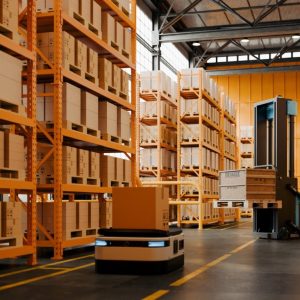
Supplied by ASP Fire
Installing fire protection systems is only the beginning. Regular inspection, testing and maintenance ensure that systems perform as intended during an emergency. Sprinkler systems, fire pumps, hydrants, smoke detection equipment, fire extinguishers and emergency lighting all require routine servicing by competent personnel.
This is particularly important in logistics and cold-chain facilities, where operations are often continuous and any interruption can quickly have consequences beyond the physical premises. A refrigeration system, for example, may be designed to maintain product temperatures around the clock, while loading and distribution operations can continue across multiple shifts.
Changes to warehouse layouts, storage heights or the types of products being stored should also trigger a review of the facility’s fire protection strategy.
“Warehouses are dynamic environments. Storage configurations change, inventory changes and operations evolve. Fire protection systems must evolve with them,” notes van Niekerk.
This is an important consideration for cold-chain operators. A facility may initially be designed for a particular product mix or storage configuration, but changes in customers, inventory volumes, pallet configurations or refrigeration requirements can alter the underlying fire risk. Fire protection should therefore be reviewed as the operation changes, rather than only when a major refurbishment takes place.
Employee training remains equally important. Workers should understand emergency procedures, evacuation routes, fire extinguisher use and incident-reporting protocols to support rapid response during the critical first minutes of an emergency.
Extensive financial consequences
For many organisations, the financial consequences of a warehouse fire extend well beyond property damage. Production interruptions, supply shortages, contractual penalties, insurance implications, reputational damage and customer dissatisfaction can have lasting impacts long after the fire has been extinguished.
In the cold chain, the consequences can be particularly severe because the value of the facility is not limited to its physical infrastructure. Stock may be perishable or subject to strict temperature requirements, while customers may depend on uninterrupted storage and distribution to maintain their own operations.
A fire that disables a cold store can therefore create a chain reaction: inventory may be lost, alternative storage capacity may need to be found, deliveries can be delayed and customers further down the supply chain may be affected.
“As supply chains become increasingly interconnected, a single warehouse fire can disrupt operations across multiple industries. Investing in appropriate fire protection is ultimately an investment in business continuity,” says van Niekerk.
The same principle applies beyond cold-chain facilities. Modern logistics networks are increasingly interconnected, meaning that the failure of one major distribution point can affect manufacturers, retailers, exporters and customers across a much wider geographical area.
Fire safety should therefore not be viewed solely through the lens of regulatory compliance or insurance requirements. Instead, it should form part of a broader operational resilience strategy that protects employees, customers, assets and the wider supply chain.
For cold-chain businesses, this means considering fire protection alongside refrigeration reliability, emergency power, temperature monitoring, contingency storage and disaster-recovery planning. The objective is not simply to prevent a fire, but to ensure that an incident does not become a prolonged supply-chain failure.
“Effective fire protection is about being prepared before an emergency occurs. By combining sound engineering, regulatory compliance, ongoing maintenance and risk-based planning, warehouse operators can significantly reduce fire risk while safeguarding the continuity of their businesses,” concludes van Niekerk.