
By Eamonn Ryan
The Port of Cape Town is improving from its position of being the worst in the world to still being the worst in the world, but better.
© Cold Link Africa
New labour arrangements, more rail capacity and a focus on exploiting short weather windows are at the heart of Transnet’s preparations for the coming fruit export season. The Port of Cape Town may still carry the dubious distinction of being ranked among the world’s worst-performing container ports, but preparations for the next deciduous fruit export season suggest that lessons are at least being learned.
Following severe disruption during the previous season, the Department of Transport and Transnet are introducing a series of operational measures aimed at ensuring that the port can make the most of increasingly limited weather windows. The challenge is particularly acute for the Western Cape fruit industry, where exports are highly seasonal and delays at the port can rapidly translate into congestion throughout the cold chain.
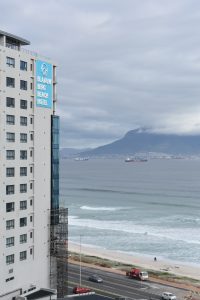
Last season demonstrated the problem starkly. During November and December, the Port of Cape Town experienced 32 days in which wind speeds exceeded 100km/h, preventing fruit from being loaded on every second day. The disruption occurred despite approximately R2-billion in capital expenditure on new port equipment.
The problem, however, was not simply a lack of equipment. When the wind dropped and loading operations could resume, there was often insufficient dock labour available to take full advantage of the relatively short operating windows.
As Transport Minister Barbara Creecy explained during an interview with Moneyweb@Midday host Jeremy Maggs, the critical question was whether the port could immediately mobilise enough people when conditions improved. “The key issue is when the wind stopped. Can you get all hands on deck immediately?”
In some cases, the available window could be as little as five or six hours before the wind returned. “That’s what we found, we didn’t have sufficient labour available in the docks,” Creecy said.
Making every weather window count
Transnet has consequently reorganised its labour arrangements ahead of the new season. Western Cape stevedores will not take leave during the most intensive part of the export season. In addition, auxiliary stevedores will be brought in from other ports. The intention is to ensure that all available berths can be operated simultaneously when the wind drops.
The change reflects a broader recognition that Cape Town’s weather is not simply an occasional operational inconvenience. High winds are a recurring constraint on port operations, and climate variability could make the ability to respond rapidly even more important.
“As far as I’m concerned, climate change is a fact of life. So we have to accept that we are likely to have severe wind, and we can’t be using that as an excuse for not performing,” Creecy said. The objective, she said, is to develop operating systems capable of functioning around extreme weather. “When that wind dies, we must be ready to roll.”
Rail capacity gets a boost
Labour is only one part of the equation. Transnet is also increasing rail capacity between its Belcon back-of-port facility and the port. Train movements are being increased from one or two trains to five concurrent trains. With each train capable of carrying up to 100 containers, the additional capacity should help move substantially more export cargo without relying entirely on road transport.
That has implications beyond port productivity. A sustained increase in truck movements around the port can create congestion at the gates and on surrounding road networks, while also adding pressure to an already stretched logistics chain.
Increasing rail capacity therefore provides an opportunity to move containers more efficiently between inland logistics facilities and the port while reducing dependence on trucks for every container movement. For fruit exporters, the objective is ultimately straightforward: get refrigerated containers from farms, packhouses and cold stores to the vessel within the available export window.
That becomes particularly important when a weather-related closure has already created a backlog.
A problem that extends beyond the port gates
The measures being introduced for the coming season are therefore more than an attempt to improve ship loading. They point to a growing recognition that Cape Town’s export problem cannot be solved by port equipment alone.
Fruit moves through a chain involving growers, packhouses, cold stores, transport operators, freight agents, shipping lines, rail services and the port itself. A failure at any point can ultimately affect the exporter’s ability to meet a vessel’s sailing schedule. That is why another proposal now being developed could prove even more significant than the immediate operational changes.
Industry stakeholders are calling for the port’s existing ‘war room’ approach to be expanded beyond Transnet’s own operations to include the wider logistics value chain. The next step is therefore not simply to get the port working better, but to get the entire export chain working as one system.
Part 2 will examine the proposed ‘port community of practice’ and why a whole-value-chain war room could represent a fundamental change in the way Cape Town’s export logistics are managed.