
By Eamonn Ryan
During the course of the past year Cold Link Africa has written articles on both the prevalence of private equity firms at the last GCCA Africa conference, as well as the startling number of mergers and acquisitions in HVAC&R both internationally and in South Africa. GCCA’s magazine Cold Facts recently unpacked the subject too with investor relations expert Evan Pondel. This is part one of a four-part series.
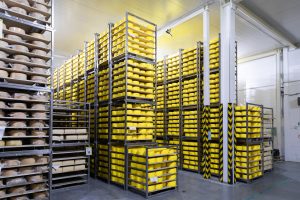
For decades, cold storage sat quietly in the background of the global economy. Refrigerated warehouses were seen as highly specialised industrial facilities – essential, but hardly glamorous. Today, that perception has changed dramatically. Institutional investors, private equity firms, infrastructure funds and sovereign wealth capital are now pouring billions into temperature-controlled logistics, transforming the sector into one of the most sought-after asset classes in industrial real estate.
The shift has been driven by a combination of food security concerns, pharmaceutical growth, supply chain disruption and the rapid rise of e-commerce grocery delivery. What was once viewed as a fragmented, family-owned industry is now increasingly dominated by global platforms operating sophisticated, technology-driven networks.
Cold Facts recently explored the trend in an interview with investor relations specialist Evan Pondel, founder of Triunfo Partners, who outlined why cold storage has become one of the most attractive investment opportunities in logistics infrastructure.
According to Pondel, refrigerated warehousing offers something rare in modern investment markets: a blend of stable real estate returns and high operational defensibility. Unlike standard warehousing, cold facilities are expensive to build, energy intensive to operate and require specialised expertise. Those barriers make them difficult to replicate.
“Temperature-controlled storage blends real estate stability with industrial operating complexity. It offers inflation-linked pricing, high barriers to entry, and sticky, long-term customer relationships that make it more defensible than generic warehousing,” Pondel explained.
That combination has made the sector especially attractive during a period of global economic uncertainty. Investors increasingly view cold storage as critical infrastructure, similar to utilities or data centres, because modern food systems and pharmaceutical supply chains cannot function without it.
The COVID-19 pandemic accelerated this perception shift dramatically. During lockdowns and border disruptions, weaknesses in global supply chains became painfully visible. Consumers emptied supermarket shelves, pharmaceutical companies raced to distribute temperature-sensitive vaccines, and logistics providers scrambled to secure refrigerated capacity.
“A decade ago, this was largely a family-owned, under-the-radar industry. Then COVID happened and everyone suddenly realised cold chain was critical infrastructure,” said Pondel.
The pharmaceutical sector has become one of the biggest long-term drivers of investment. Ageing populations, biologics, gene therapies and mRNA-based medicines all require highly controlled temperature environments throughout storage and distribution. Investors increasingly see pharmaceutical cold chain demand as resilient, long-duration growth that extends far beyond food logistics.
At the same time, e-commerce grocery delivery continues reshaping distribution networks. Online grocery platforms require strategically located refrigerated fulfilment centres capable of handling rapid delivery windows and smaller, more frequent orders. This is driving demand for modern facilities closer to urban centres.
Institutional capital has responded aggressively. Since 2015, cold storage transactions have accounted for roughly R350-billion in commercial real estate investment activity, according to MetLife Investment Management. Although still a relatively small percentage of total industrial real estate, the sector’s growth trajectory has attracted growing attention from major funds.
One reason investors remain optimistic is the severe shortage of modern facilities. Many cold stores globally are ageing assets built decades ago, often with outdated refrigeration systems, inefficient layouts and limited automation capabilities. Replacing them is expensive. Cold storage facilities can cost four times more to develop than conventional warehouses, frequently exceeding approximately R26 000 to R35 000 per square metre (based on an exchange rate of roughly R16.50 to the US dollar).
That high replacement cost creates what investors describe as a ‘moat’ around existing facilities. In many strategic logistics locations, there are few code-compliant refrigerated sites available, which increases both rental pricing power and acquisition valuations.
Pondel notes that buyers are increasingly paying not only for current revenue, but for future strategic positioning.
“When something comes to market, buyers are paying for future optionality as much as today’s income,” he said.
© Cold Link Africa